Artist · French
André Lhote
1885–1962
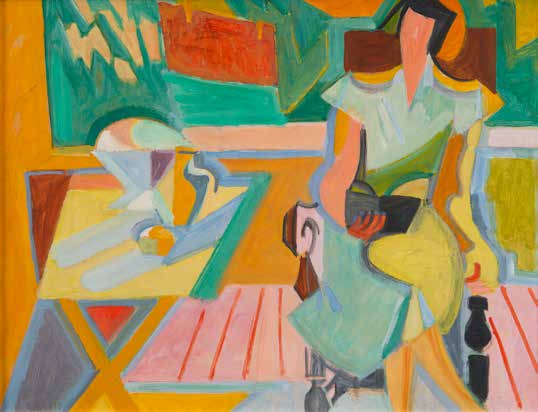
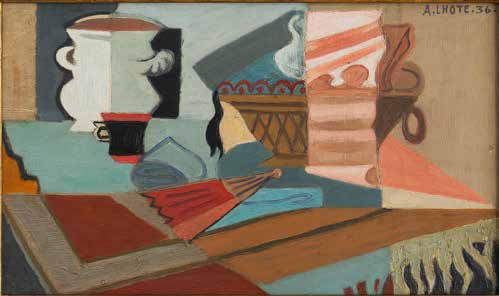
André Lhote was a French sculptor and painter of figure subjects, portraits, landscapes and still life. He was also very active and influential as a teacher and writer on art.
After initially working in a Fauvist style, Lhote shifted towards Cubism and joined the Section d’Or group in 1912, exhibiting at the Salon de la Section d’Or.
He was alongside some of the fathers of modern art, including Gleizes, Villon, Duchamp, Metzinger, Picabia and La Fresnaye.
The outbreak of the First World War interrupted his work and, after discharge from the army in 1917, he became one of the group of Cubists supported by Léonce Rosenberg.
In 1918, he co-founded Nouvelle Revue Française, the art journal to which he contributed articles on art theory until 1940.
Lhote taught at the Académie Notre-Dame des Champs from 1918 to 1920, and later taught at other Paris art schools — including the Académie de la Grande Chaumière and his own school, which he founded in Montparnasse in 1922.
Lhote lectured extensively in France and other countries, including Belgium, England, Italy and, from the 1950s, also in Egypt and Brazil. His work was rewarded with the Grand Prix National de Peinture for 1955, and the UNESCO commission for sculpture appointed Lhote president of the International Association of Painters, Engravers and Sculptors.
Lhote died in Paris in 1962.
Collection
Works in the Collection