Artist · French
Jean-Pierre Pincemin
1944–2005
Jean-Pierre Pincemin was an influential, self-taught French painter, printmaker, and sculptor who became a vital figure in post-war European abstraction. Born in Paris, he initially worked as an industrial lathe turner and precision mechanic. His artistic awakening occurred during frequent visits to the Louvre, which inspired him to transition from art criticism to practical creation in the mid-1960s.
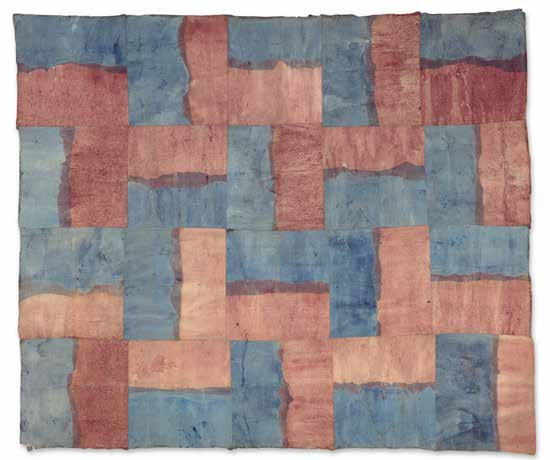
In the late 1960s, Pincemin aligned with the radical Supports/Surfaces movement, a group that sought to strip painting of its traditional illusions by focusing strictly on its physical components—canvas, frame, and raw material. Influenced by his industrial background, he experimented relentlessly with non-traditional mediums, constructing geometric, architectural works using found wood, wire mesh, and dyed canvas strips, most notably in his celebrated Palissades (Palisades) series.
By the 1980s, Pincemin boldly broke away from strict minimalist abstraction, introducing figuration, botanical elements, and historical imagery inspired by medieval art and sacred themes into his grand compositions. Throughout his career, he rejected rigid stylistic boundaries, continually bridging the gap between rigorous structural geometry and lyrical figuration. He died in Arcueil in 2005, leaving behind a highly inventive and multifaceted legacy.
Collection
Works in the Collection