Artist · Portuguese
Maria-Helena Vieira da Silva
1908–1992
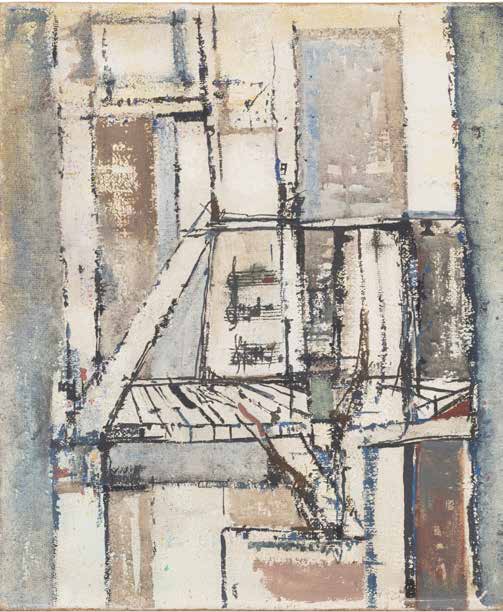
Maria Helena Vieira da Silva was a Portuguese abstract painter, pivotal in the European Art Informel movement, renowned for intricate interiors and cityscapes that probed space through layered lines and perspectives. Born in Lisbon on June 13, 1908, she studied drawing locally before moving to Paris in 1928 at age 20, enrolling at Académie de la Grande Chaumière and under Fernand Léger, immersing in the avant-garde milieu. There, she met and married Hungarian painter Árpád Szenes in 1930, exhibiting early works and befriending dealer Jeanne Bucher.
World War II forced the couple from Paris in 1939; after a brief Lisbon stay—where her Portuguese citizenship was revoked due to Szenes’s Jewish heritage—they exiled to Rio de Janeiro in 1940, residing until 1947. In Brazil, her dense compositions gained acclaim, influencing neo-concretism via ties with poets like Murilo Mendes and shows at Museu Nacional de Belas Artes. Returning to Paris postwar, she adopted French citizenship in 1956, refining her abstract style amid Montparnasse’s networks.
Vieira da Silva diversified into tapestries, stained glass—like Reims’s Saint Jacques windows (1966–1976)—and Lisbon’s Cidade Universitária azulejos (1988). Honors included the 1961 São Paulo Biennial prize, first woman recipient of France’s Grand Prix National des Arts (1966), and Chevalier of the Legion of Honor (1979). She died in Paris on March 6, 1992, leaving a legacy of spatial innovation.
Collection
Works in the Collection